View More Insulated Shed Images
Click on image below to see larger versions of insukated lined sheds (Opens new page)
Click on image below to see larger versions of insulated workshops (Opens new page)
Click on image below to see larger versions of insulated workshops (Opens new page)
Click on image below to see larger versions of insulated workshops
Should I Insulate My Garden Shed?
Throughout the summer months, it’s no problem using your building in your garden for the normal day-to-day things, whether it’s a little pottering about or enjoying being away from the house. But in the cold winter weather, it becomes unusable. Which is a shame? How much better would it be if you could use it year-round, with no limitations on what you could do down there?
Well, this is possible by choosing an insulated shed, so you won’t mind going down there all year round. You would then be able to enjoy your hobby down there, possibly allow your children to use it with reservations, or maybe enjoy a little time away from the hubbub of the daily grind.
If you had a little ‘home cottage’ type business and used it in connection with that activity, then you could claim the cost against your profits, so that would make it even more feasible.
Is It Possible To Insulate Shed After Delivery?
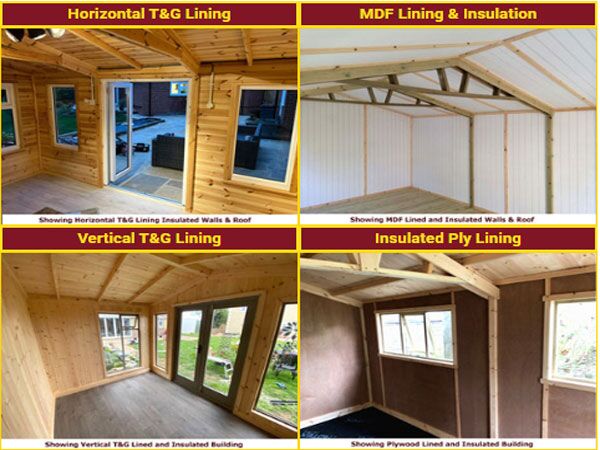
If you have reasonable DIY skills, you can line and insulate it after delivery. You would need to buy the insulation, normally fibreglass insulation or polystyrene, and some form of internal cladding. Mostly plywood would be used, or maybe hardboard with an attractive veneer finish, or T&G cladding.
To add the insulation, you would need to cut it to fit within the internal timber framing. If you are using polystyrene, you will find it stays in place on its own. With the fibreglass, you’ll need to tack it into place, as it’s quite floppy.
When insulating the shed roof, I would always recommend polystyrene, as it can be cut slightly oversize and pushed into position. It would then be self-supporting. Ideally, get one or two friends in when you are doing the roof as they will be able to hold the roof sheets or T&G in place whilst you secure it.
How Proper Insulation Can Help Alleviate Condensation
The joy of developing a garden comes from its overall vision and specific management practices, from refining pathways and creating flower beds to patiently growing vegetables—practices that are deeply satisfying to plan and complete. Gardening is also a hobby that presents exciting challenges, such as keeping the soil rich during a warm summer, protecting against pests, and maintaining your garden buildings. This last question is increasingly pertinent for the upkeep of garden utilities.
While many insulated sheds, summerhouses, garden rooms, workshops, freestanding garages, and outbuildings are constructed from robust, weather-resistant materials, constant exposure to the elements may affect them. One effect involves condensation, a problem familiar in homes.
It’s essential to engineer solutions to prevent condensation in humid growing environments, especially in spaces with limited ventilation and without slated roofing. Our guide aims to serve as a comprehensive resource for understanding and tackling condensation in sheds. Click to read our article in full.
Shed Guttering: Why It’s Essential and How to Install It
When you maintain your insulated garden shed, you probably don’t think of guttering first. However, adding gutters to your shed is more important than many people realise. Gutters protect the building and offer practical benefits for your garden and outdoor space. Read on as we explain why shed guttering is essential, outline its benefits, and guide you on how to install it yourself.
Why Is Shed Guttering Essential? Shed guttering gives your property a long-term solution for several reasons. Water poses a major threat to a wooden shed. When rainwater drips down your shed’s walls, it can seriously damage the structure over time. Persistent exposure leads to rotting wood, mould growth, and even structural instability. Guttering stops rainwater from flowing down the shed walls. It directs water away from the shed’s structure, helping prevent long-term damage. More details
Will My Insulated Timber Building Be Cosy In The Winter?
Adding insulation and lining will keep it warmer all year. You will need heating, like in your home, but with that, it should be nearly as warm. Whether you do it yourself or we do, this is a great, viable option.
As for heating, we recommend an electric radiator, as it produces nice, dry heat. Do not use a Calor gas heater, as it produces excessive moisture and poses a fire risk. Don’t even attempt to do this.
Another benefit of insulation is that the building stays cooler in summer. Not many people know this and focus only on keeping it warm. To be fair, I wasn’t aware of it until I moved from an insulated office to an uninsulated one at our display site. I was staggered by the difference.
I even went and double-checked. This is why it will be a good investment for your shed and a wise decision. You won’t regret it. The insulation option is well worth considering.
Planning Permission Guide for Insulated Shed Owners
Many UK homeowners want an insulated shed for storage, but are unsure about whether planning permission is required. The key answer is: it depends. Since changes introduced in 2008 under the Town and Country Planning Act, many sheds no longer require planning permission if they meet certain conditions.
These rules were meant to simplify things and allow people to build insulated outbuildings, such as sheds, garages, cabins, and greenhouses, without formal approval, provided they comply with specific guidelines. This gave homeowners greater freedom and lessened interference from local planning authorities.
Overall, if your shed complies with permitted development rules, you likely won’t need planning permission. Checking the guidelines beforehand helps you avoid issues and adds an insulated shed to your garden with confidence. click to read our article in full
The Ultimate Guide To Building A Shed Base
Insulated sheds are a must-have addition to any traditional British garden. These sanctuaries allow you to enjoy the seasons in all their splendour while being protected from the sun, wind, and rain.
However, if you want them to last, you must understand how to lay the foundation. A poor base can lead to condensation problems inside, causing dampness and potential damage. It may also decompose from the ground up, tip over, or fall victim to the wind if you don’t.
When constructing an insulated structure, a foundation is essential for stability and durability. Without a solid foundation, the structure is prone to shifting and settling, with long-term consequences.
A proper base provides a level, strong surface for the shed and spreads the shed’s weight and its contents over the full area. It also ensures that the building is raised off the ground. Click to read our article in full.
Can An Insulated Garden Shed Help Sell My House?
There are many things that make a house easier to sell, such as being in good repair and condition, in a good area, and near the right schools. Another main area is the garden. Notably, the front garden makes a first impression on potential buyers, while the back garden must impress as well. Ensure the grass is cut, the weeds are removed, and any random items are tidied away for an uncluttered look.
Garden buildings can also play a part, especially if lined and insulated, making your house more desirable.
Building on the importance of garden features, the appeal of an insulated garden shed is strong, giving prospective purchasers the opportunity to use it as an office, a recreation or craft room, or a den for children. The most important consideration is to ensure it is lined and insulated to keep it warmer in winter and cooler in summer.
FAQs For Insulated Sheds
No results!
-
Are there any downsides to insulated sheds?
A few things to keep in mind: insulation takes up some space inside the
shed, and if you don’t ventilate it properly, damp can still build up behind the insulation. Some materials, like mineral wool, can sag over time, so check them every couple of years.
-
Can I use an insulated shed as a winter workshop or home office?
Yes, an
insulated shed can be a comfortable winter workshop or home office. Insulation keeps it usable year-round, lets you heat it more efficiently, and many Surrey residents use theirs for hobbies or as an office space.
-
Do I need planning permission for a shed in Surrey?
Usually, you don’t need
planning permission for standard garden sheds. However, if your shed is very tall, positioned forward of your house, or in a conservation area, you might need permission. Check with Guildford Borough Council or Woking planning just to be sure.
-
How do I properly insulate my shed?
For proper insulation, first check for draughts around doors and windows. Then fit insulation between wall studs or joists and cover with a vapour barrier to prevent damp. Don't forget the roof, as insulating it makes a big difference, and ensure shed ventilation to prevent condensation.
-
How long does shed insulation last?
When properly installed,
shed insulation can last over 10 years. Rigid boards tend to last longer than mineral wool, which can settle, so inspect every few years for damp or sagging and replace if needed.
-
How much does it cost to insulate a shed in Surrey?
It depends on the size and materials. For a small shed, you might spend a few hundred pounds; for a larger shed with high-quality insulation, you could spend over £1,000. Doing it yourself with foam boards or foil insulation can be cheaper, while hiring someone adds labour costs.
-
Why should I get an insulated shed for my garden in Surrey?
An insulated shed keeps your things safe from damp and extreme temperatures. In winter, it stays warmer, so you can still use it as a workshop or storage, and in summer, it helps keep it cooler. Plus, it helps protect your tools, furniture, and equipment from condensation-related damage.
-
Will insulation stop my shed from getting damp in Woking’s weather?
Insulation helps, but it’s not a magic fix. It keeps the shed warmer, which reduces condensation, but you still need good ventilation. Installing vents or leaving a small gap at the bottom of doors can improve airflow and help prevent damp.


 From £1449
